
Saturday · October 10, 2026 · The Petrenko Group
Does a Private Dock Increase a Lake Norman Home's Value?
Yes, a permitted, usable private dock is the strongest single value driver on Lake Norman: dockable deep-water frontage can list near double a non-dockable cove lot. Here is what the premium, the dock rules and the 2026 data actually show.
Full Lake Norman market section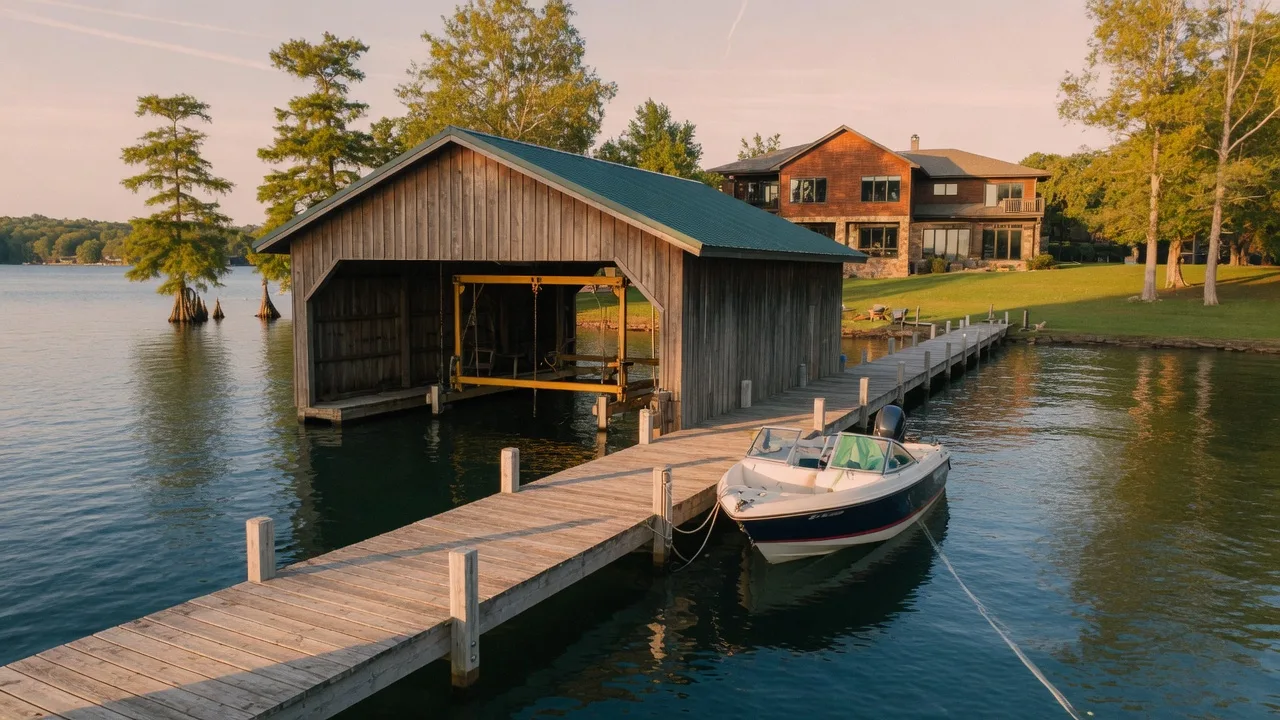
Yes. A private dock is the single strongest value driver on Lake Norman, and the market prices it before the house. Dockable, deep-water frontage on the open lake typically lists at roughly $1.25 million and up, while restricted or non-dockable cove lots trade near $600,000 to $1.2 million, which means a permitted, usable dock can carry a property close to double the value of the lakefront lot it shares a cove with. The premium is not a fixed percentage; it is site-specific, set by water depth at the dock face, shoreline classification under Duke Energy's rules, and the condition of the permit record. But across North Carolina's largest lake, in Mecklenburg, Iredell and Lincoln counties and the lake towns of Cornelius, Davidson, Mooresville, Denver and Sherrills Ford, the pattern is consistent: buyers bid first for the dock, and the dock carries the value.
Yes, and the premium is the first thing the market prices
The standard rule of thumb for the broader Lake Norman area is that homes near the water trade 10 to 40 percent above comparable homes farther from the water, and the largest single jump is between true waterfront and near-lake. Within waterfront itself, the dock is the differentiator. A deep-water lot on Jetton Road in Cornelius closed in July 2026 at $5.8 million, roughly 15 percent over asking, on a property whose dock and boathouse were central to the sale, and it was far from the only waterfront sale priced on the water that month. The dock is not an amenity bolted onto the home's value. A large share of the value lives inside it.
On Lake Norman, the biggest gap within waterfront is dockable versus non-dockable, not main lake versus cove, and every pricing conversation starts there.
Why a dockable lot is worth so much more than a lakefront lot without one
Every Lake Norman listing is really two assets: a house and a piece of water, and the water is only an amenity if you can use it. A dockable lot with deep water at the dock face can hold a boat lift, a runabout or a cruiser, and it can keep doing it in dry years when shallow coves shoal to mudflats. A non-dockable lot still earns a real lakefront premium for its views and its access, but it trades in a different band: pricing guides consistently show wide-open-water, dockable lots from roughly $1.25 million while restricted or non-dockable cove waterfront runs from about $600,000 to $1.2 million. A near-double spread on the same body of water is why the dock question belongs ahead of paint colors and square footage, and sellers know it. One Lake Norman listing went so far as to offer a $100,000 credit toward building a dock, because the seller knew buyers would discount the property without one otherwise.
The Duke Energy rules underneath the premium
None of this value exists by right. Duke Energy owns the water below the 760-foot full-pond line, and every dock, lift or boathouse on Lake Norman needs a Lake Use Permit under the Catawba-Wateree Shoreline Management Plan. The rules shape which lots become dockable: total dock square footage is capped at about 1,000 square feet, allowances run to roughly 10 square feet per linear foot of developable shoreline, and the full allowance usually requires about 75 feet of frontage. A 50-foot buffer measured from the full-pond line keeps structures and major grading off the immediate bank, and walkways generally extend no more than about one-third of the way across a waterway. Steep banks, shoaling coves, narrow lots between neighbor docks and channel setbacks can all shrink what a permit will allow.
This is why shoreline classification, not the listing photos, decides the premium: two adjacent lots with the same view can sit on opposite sides of the dockable line.
The July 2026 rule that made existing docks worth more
Effective July 1, 2026, Duke Energy stopped reviewing private dock applications on any of its lakes, from Lake Wylie to Mountain Island Lake, where no home is constructed on the adjoining lot. Lake Norman still has vacant shoreline, but the dockable future of a bare lot can no longer be recreated at will: the permit path now requires the home to exist first. That one rule change moved the value of existing, permitted docks up across all three Catawba lakes, and on Lake Norman it sharpened the line between a lot with a standing dock and a lot waiting on a harder-to-guarantee future.
For buyers, the dock question has moved to first-stage due diligence. For sellers, an existing permit record is more valuable at resale than it was a year ago.
What the 2026 market shows for dockable Lake Norman
The 2026 sales data compiled from Canopy MLS-based reports tells the same story. Waterfront single-family homes on Lake Norman closed at a median of about $1,653,982 in May 2026, the April median came in near $2,425,000, and the year-to-date waterfront median hovered around $2.4 million. The 22 shoreline closings in May sold at about 96.6 percent of list price, active shoreline single-family inventory sat near 228 homes, and the average pace was about 68 days on market. At the top of the band, the projected 2026 average for luxury waterfront approaches $3.1 million, with Cornelius near $3.8 million, Davidson near $3.2 million and Mooresville near $2.6 million, and Mooresville closings above $3 million more than tripled year over year in the first quarter.
None of those figures is the dock premium by itself. They are the prices of homes that, almost without exception, sit in their band because the dock is there.
How to price the dock into your offer
Because the premium is site-specific, the only reliable number comes from comps on the same water. Ask your advisor for dockable versus non-dockable sales on the same cove or peninsula within the last eighteen months, then add the verification layer: the existing shoreline permit and its history, depth readings at the dock and along its face at full pond, what the level actually did in the most recent dry years, and a survey note showing the 760-foot contour and the buffer line. The permit record must match everything standing, including lifts and covered slips, because a structure built without a permit does not grandfather itself simply because it is old.
A dock that cannot hold your boat is an amenity. A dock that can, with a clean record behind it, is the premium.
The bottom line
Yes, a private dock increases a Lake Norman home's value, usually by a wide margin, and the size of that margin lives in the water facts, not the listing. Dockable, deep-water frontage carries the top of the market; non-dockable shoreline still carries real value but trades at a discount; and the July 2026 rule change made existing, permitted docks harder to replace. Verify the permit, the depth and the comps before you offer, and the premium stops being a guess. On Lake Norman, the dock is not a detail of the home. It is the reason the home sits in its price band at all.
Have a question about lake norman waterfront? Ask an advisor who walks these docks weekly.
Talk to Vic and AmyContinue reading
All entries
Lake Norman · September 1, 2026
The Lake Norman Waterfront Buyer's Guide: What to Know Before You Make an Offer

Due Diligence · September 3, 2026
Docks 101: How Duke Energy Shoreline Permits Work on All Three Lakes
Lake Wylie · September 5, 2026
Lake Wylie Communities: From Tega Cay to the Catawba Border
Private consultation
Bring us your shoreline questions
Depth at the dock, permit history, buffer lines, comparable sales: tell us what you are evaluating and we will bring you the facts.
The Petrenko Group · Premier Sotheby's International Realty · 138 Village View Lane, Mooresville, NC 28117.