Saturday · September 12, 2026 · The Petrenko Group
Historic Waterfront Homes on Lake Norman: Character With a Story
The lake submerged whole communities in the 1960s, and a handful of waterfront homes answer to architects, not builders. Here is what the historic market looks like.
Full Lake Norman market section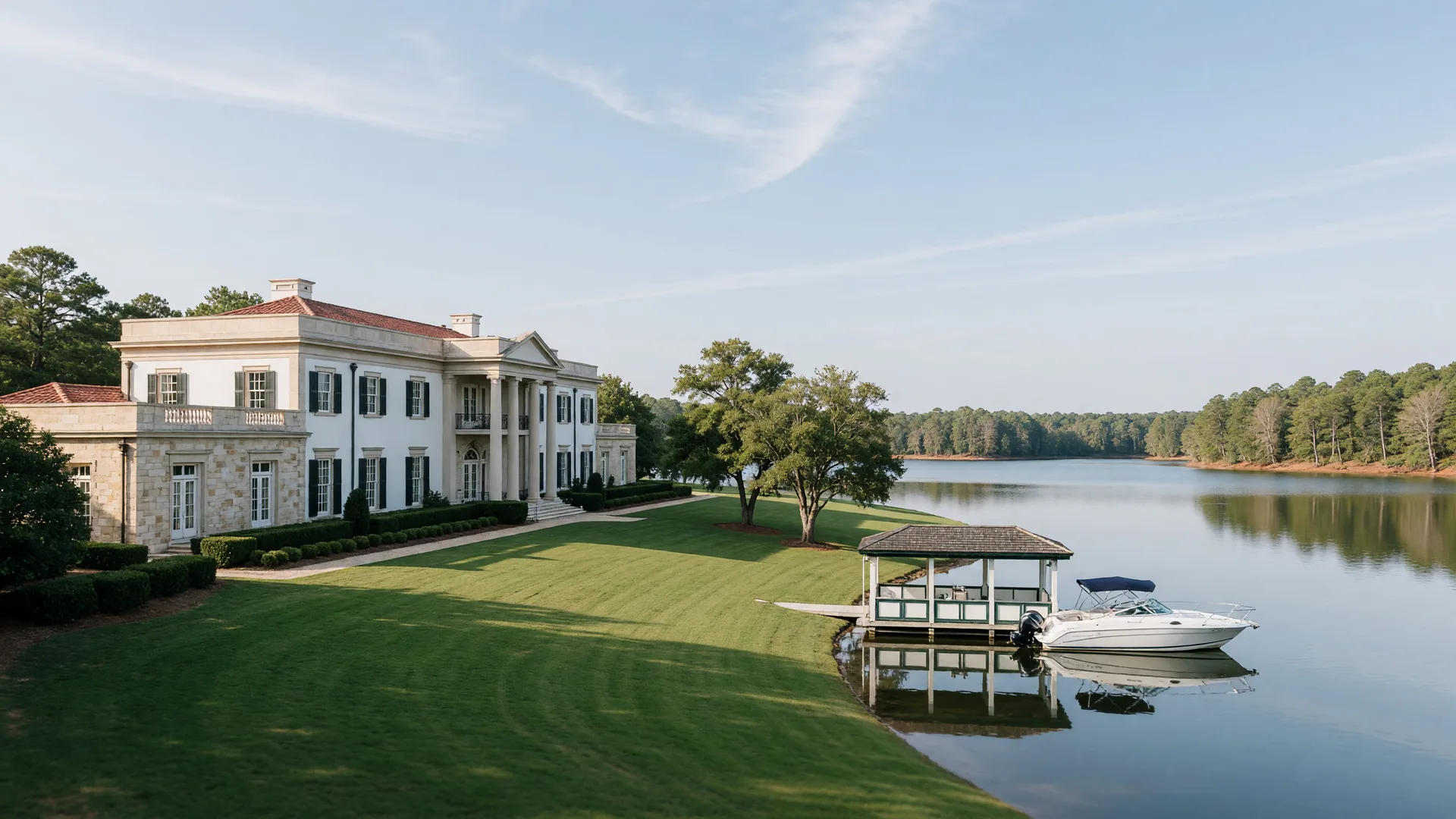
Lake Norman is younger than most people assume: the Catawba River was only dammed at Cowans Ford in the late 1950s, and the lake reached full pool in 1963, flooding farms, homes and whole former communities in the process. That history means the lake's most interesting inventory is not pre-war architecture but the first generation of lakeside retreats, mid-century homes and reclaimed historic structures that now sit on water that did not exist when they were built.
The first generation of lake homes
The earliest homes on Lake Norman went up in the 1960s and 1970s, when the shoreline was cheap and the builders were small. That first generation produced a genuine architectural record of Carolina lake living: low-slung mid-century ranches, A-frames, stone lodges with fieldstone fireplaces and walls of glass facing the water. These homes rarely offer the open floor plans of modern builds, but they offer proportion, materials and a sense of place that new construction cannot fake, and a surprising number survive with original character intact.
Reclaimed and relocated structures
Because the reservoir flooded existing settlements, a small but fascinating slice of the lake's history is literal: structures that predate the water, relocated or rebuilt above the full-pond line. Stories like these carry real value for the right buyer, and properties with a documented past typically carry a following. When a home's narrative is verified, through photographs, deeds, church records or town archives, it becomes part of the asset, and we have seen those histories close deals that comparables alone would not support.
What historic character costs and returns
Expect two curves on a historic waterfront home: the market value line, which tracks the lake, the depth and the condition, and the character line, which tracks scarcity and story. Buyers who prize the lake part are served by any modern build; buyers who prize the whole are not. The two groups bid on different properties, which is why a stone lodge with a documented 1960s pedigree can trade at a premium to a comparable contemporary lot while costing less per square foot than a spec build.
Working with a preservation eye
Vic and Amy Petrenko carry the designations that matter for this market, GRI and Certified Historical Preservation Specialist credentials, and on lakeside towns with deep history the preservation lens changes every part of the transaction: what can be altered inside the buffer, what a historic structure may and may not change, and what the next buyer will value. For a seller, that lens protects the story and the price. For a buyer, it protects the investment in character.
The bottom line
Lake Norman's historic waterfront inventory is small, specific and permanently finite, because no one is building more of it. If a mid-century lakeside lodge or a structure with a story catches you, move deliberately: verify the history, understand what the shoreline rules allow, and price the character as seriously as you price the water.
Have a question about lake norman waterfront? Ask an advisor who walks these docks weekly.
Talk to Vic and AmyContinue reading
All entries
Lake Norman · September 1, 2026
The Lake Norman Waterfront Buyer's Guide: What to Know Before You Make an Offer

Due Diligence · September 3, 2026
Docks 101: How Duke Energy Shoreline Permits Work on All Three Lakes
Lake Wylie · September 5, 2026
Lake Wylie Communities: From Tega Cay to the Catawba Border
Private consultation
Bring us your shoreline questions
Depth at the dock, permit history, buffer lines, comparable sales: tell us what you are evaluating and we will bring you the facts.
The Petrenko Group · Premier Sotheby's International Realty · 138 Village View Lane, Mooresville, NC 28117.