
Saturday · September 26, 2026 · The Petrenko Group
How Deep Should the Water Be When Buying a Lake Norman Waterfront Home?
The water at the end of the dock, not the phrase "deep water" in a listing, is what Lake Norman buyers actually pay for. Here is the working depth you need and how to verify it before you offer.
Full Lake Norman market section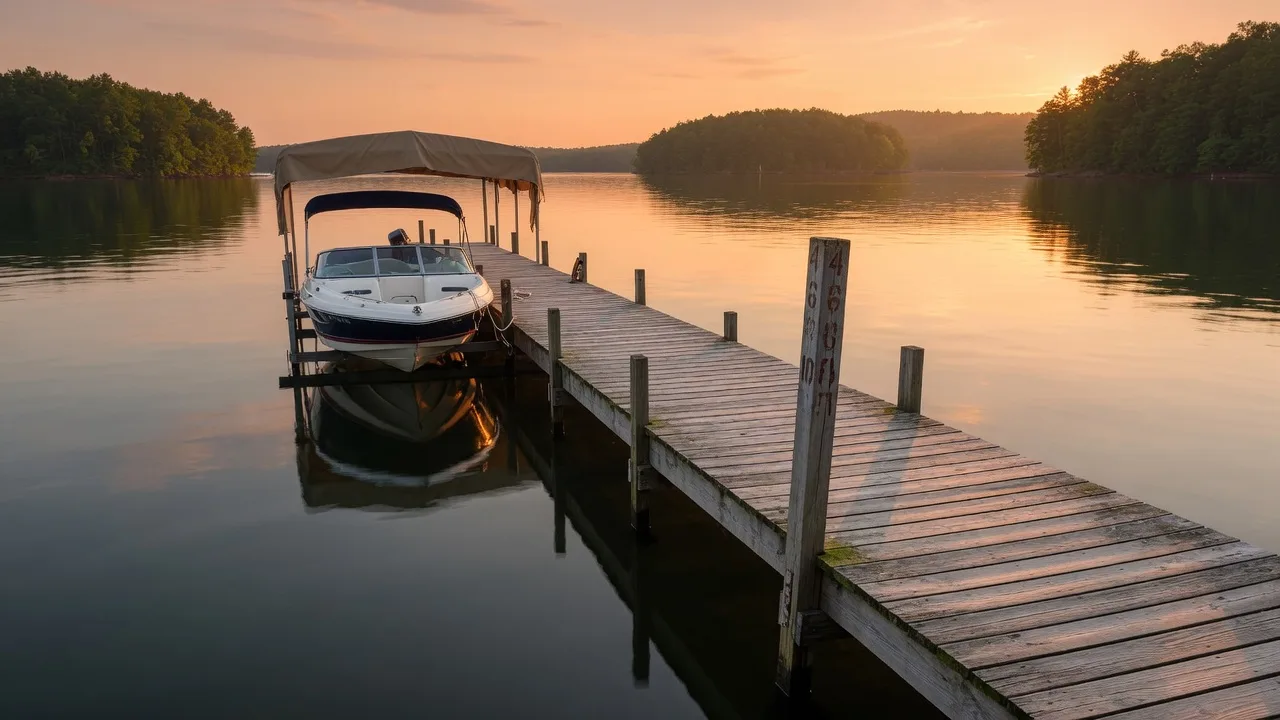
There is no single minimum water depth required on Lake Norman, but there is a working depth for every boat you plan to keep there, and it is usually lower than buyers expect. A standard boat lift operates in roughly three feet of water; a heavy-duty lift rated for a large boat needs closer to six or seven, depending on the lift and the lake level. The common planning rule is your boat's draft plus about nine to twenty-four inches of cradle clearance at the dock face. Lake Norman's full-pond line sits at 760 feet above sea level, its main channel drops to roughly 110 feet near Cowans Ford Dam, and its coves shoal quickly, so the question is never how deep the lake is but how deep the water is at this specific dock at full pond and in a dry year. That number, not the adjectives in the listing, is what you are paying for.
Why Lake Norman depth is a property fact, not a lake fact
Lake Norman is North Carolina's largest lake, roughly 32,500 acres with about 520 miles of shoreline, created when the Catawba River was dammed at Cowans Ford and reached full pool in 1963. At the dam the lake drops to about 110 feet and its average depth is roughly 33 feet, but that deep main-channel water is the exception, not the rule. Most listings sit on coves and feeder creeks across Mecklenburg and Iredell counties, from the Cornelius and Davidson peninsula to the Denver, Sherrills Ford and Huntersville shorelines, where the bottom can rise from six feet to three feet within a short boat ride off the bank. Two Lake Norman homes at the same price can behave very differently: one floats a cabin cruiser at the dock year-round, the other strands a runabout in a dry year. The difference rarely shows in the photographs.
Duke Energy manages the reservoir level and publishes the gauge reading at Cowans Ford, which reads 100 feet when the lake is at full pond. The level moves seasonally, and in past droughts it has dropped several feet, so every depth reading should be measured against the 760-foot full-pond line and against what the lake actually does in a dry year, not a wet spring.
What deep water is actually worth on Lake Norman
The market is consistent about paying for depth. In 2026 the busiest band for true waterfront sales on Lake Norman has run from roughly $1 million to $3 million, with a median verified waterfront sale around $1.65 million in mid-2026, and the top of the market keeps strengthening on deep-water, dockable properties near the dam and the south end. As a rule of thumb we use with clients, a home that might sell around $350,000 a mile off the lake typically trades closer to $700,000 to $1 million on the water with a private dock, and a vacant, buildable main-body lot with dock rights runs roughly $350,000 to $600,000 on its own. Depth, frontage and a recorded permit are the features that carry those premiums.
That is why the phrase deep water appears so often in Lake Norman listings: it is the single most durable feature on the water side of the ledger. A deep dock face holds its value through dry years and at resale, while a shoaling cove frontage is a discount that does not move back.
What depth do you actually need at the dock?
Most standard residential boat lifts operate in about three feet of water, shallow-water lifts can run in as little as two feet plus the boat's draft, and heavy-duty lifts rated for large cruisers typically need six to seven feet. The common planning calculation is the boat's draft plus about nine to twenty-four inches of clearance for the lift's bunks or cradle. A runabout that draws two feet can live comfortably at a four-foot dock face; a forty-foot cruiser cannot. Decide what you will actually moor before you tour, then ask for a depth reading at the dock and along its face, not just in the middle of the cove.
And remember the waterline moves. A dock that floats your cruiser at full pond in April can leave it sitting on its lift in a dry September, so the depth to verify is the shallowest reading over a normal year, not the reading on a full-pond spring day.
The Duke Energy rules that decide how deep a new dock can go
Every dock and lift on Lake Norman sits on Duke Energy land below the full-pond line, so each build needs a Lake Use Permit under the Catawba-Wateree Shoreline Management Plan. There is no published minimum depth; the design standard is site-specific, and the water depth and the lift's operating depth largely determine how far a new dock can reach. Total dock square footage is capped at 1,000 square feet, allowances run to about 10 square feet per linear foot of developable shoreline, walkways may extend no more than about one-third of the way across the waterway, and fixed pier decking must sit at least one vertical foot above full pond.
Two 2026 facts belong in the due-diligence file. Since July 1, 2026, Duke Energy no longer reviews private dock applications on any of its lakes where no home is constructed on the adjoining lot, so on Lake Norman the depth question belongs to properties with a house and a permit history, not to vacant lots. And the same 50-foot buffer that applies on Lake Wylie and Mountain Island Lake applies here, measured from the full-pond line, keeping structures and major grading off the immediate bank.
How to verify depth before you offer
Ask for depth readings taken at the dock and along its face at full pond, then ask what the reservoir level actually did at that dock during the most recent dry years. Request the existing shoreline permit and its history, the survey note showing the 760-foot full-pond contour and the buffer line, and the underwater profile off the shore. Confirm what was approved for the existing dock and lift, because a structure that does not match its permit does not grandfather itself. On Lake Norman, a listing that answers in adjectives, deep water, great fishing, should prompt a follow-up, not an offer.
Once a property checks out, the same facts become your negotiation: a verified depth reading and a clean permit record justify the premium, and a shoaling cove with an expired permit justifies the discount. Water depth is one of the few features you cannot add after closing, so it deserves the most explicit questions you ask.
The bottom line
On Lake Norman, buy the depth you plan to use. Most buyers need roughly three to six feet at the dock for the boat they actually own, the market pays a clear premium for water that holds that depth through a dry year, and the 760-foot full-pond line is the reference every reading should be measured against. The same planning math applies on Lake Wylie and Mountain Island Lake, with different reference lines, and an advisor who walks these docks weekly can show you what the numbers mean on a specific property. Get the readings in writing, confirm the permit record, and let the water depth rather than the listing language set your offer.
Have a question about lake norman waterfront? Ask an advisor who walks these docks weekly.
Talk to Vic and AmyContinue reading
All entries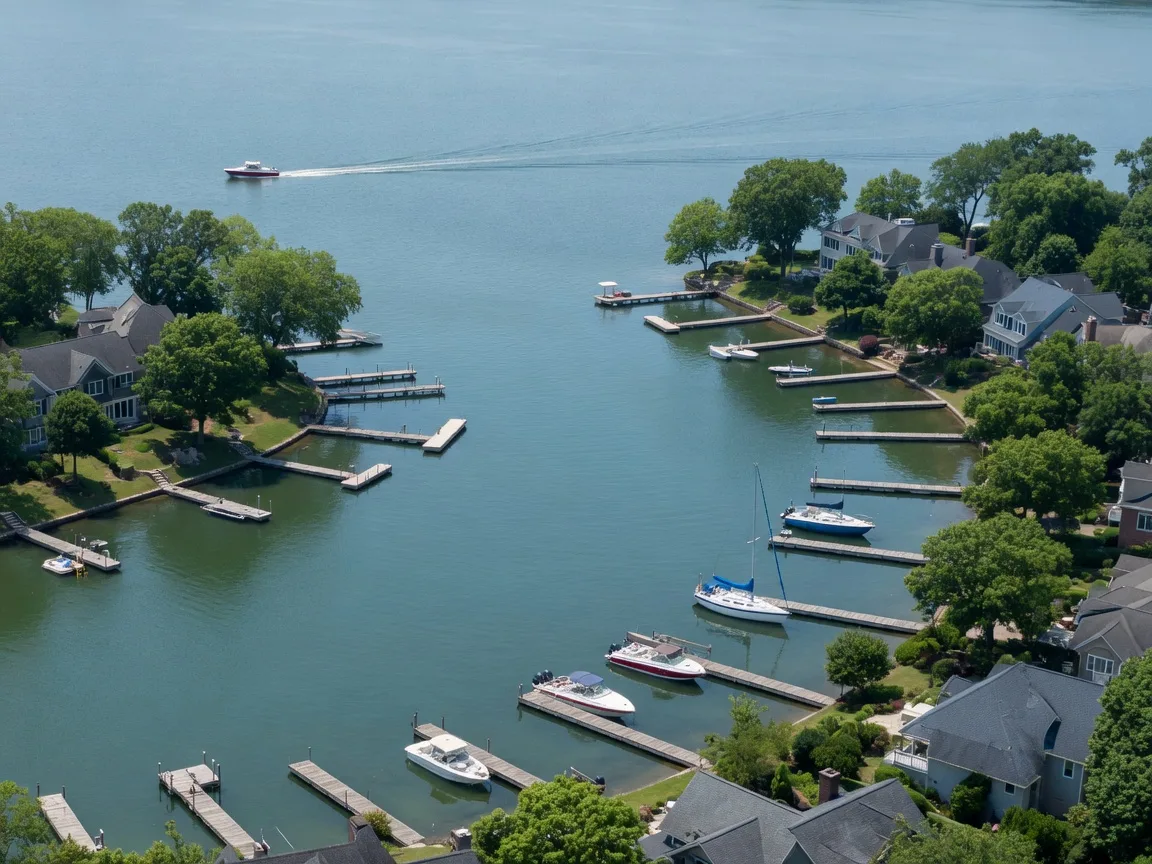
Lake Norman · September 1, 2026
The Lake Norman Waterfront Buyer's Guide: What to Know Before You Make an Offer

Due Diligence · September 3, 2026
Docks 101: How Duke Energy Shoreline Permits Work on All Three Lakes
Lake Wylie · September 5, 2026
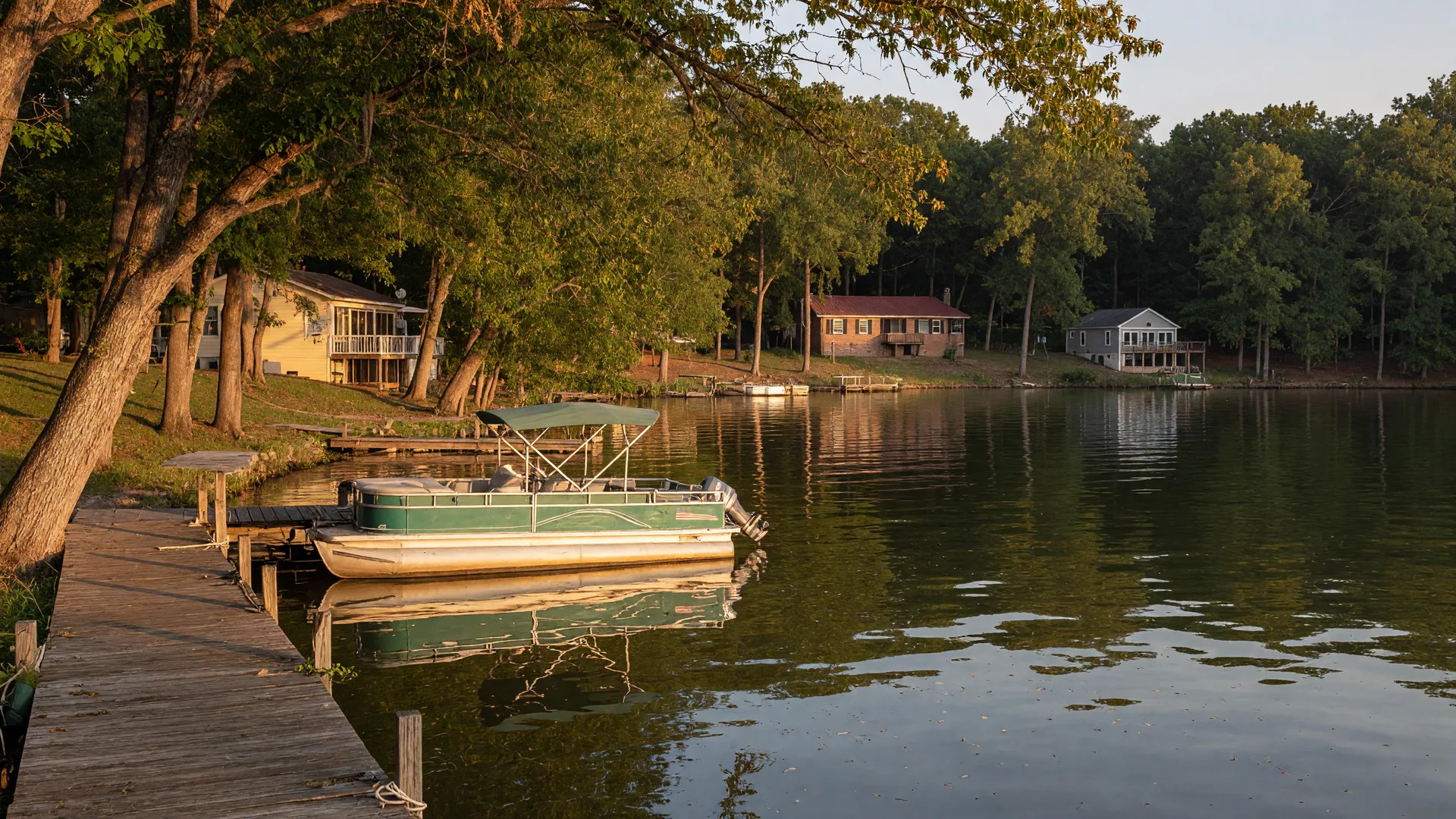
Lake Wylie Communities: From Tega Cay to the Catawba Border
Private consultation
Bring us your shoreline questions
Depth at the dock, permit history, buffer lines, comparable sales: tell us what you are evaluating and we will bring you the facts.
The Petrenko Group · Premier Sotheby's International Realty · 138 Village View Lane, Mooresville, NC 28117.